Showing posts with label family. Show all posts

Friday, October 13, 2017

Only Dead on the Inside: A Parent's Guide to Surviving the Zombie Apocalypse, by James Breakwell


James Breakwell is famous on the internet for his jokes and cartoons on family life. He has a large following on his Twitter feed, and is also on Facebook, known by his screen name, Exploding Unicorn, on both sites. Only Dead on the Inside is his first book.

If you have a family and need to keep them all safe and alive from zombies, this is your book. Buy it now, read it and keep it for reference. It could also be useful for hurricanes, earthquakes, and ordinary human bad guys. It is packed full of helpful drawings, charts, and lists, as well as general parenting advice and philosophy. And humor - good for stress relief! Stock up now on diapers, umbrella strollers, and at least one minivan. Read the book and you'll understand.

Tuesday, May 2, 2017

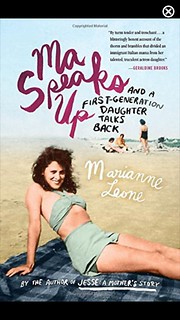
Ma Speaks Up: And a First-Generation Daughter Talks Back, by Marianne Leone

Book cover

This book spoke to me concerning my relationship with my mother, although my mother and I are very different from Ms. Leone and her mother, in culture and in temperament. I enjoyed reading this from cover to cover; I smiled, laughed, and cried. She did not hold back from telling the hard truths about her mother's background and experiences, and their relationship as it changed through the years.

An Early Reviewer book from the publisher, Beacon Press, through LibraryThing. Received on April 12, 2017 

Thursday, April 6, 2017

The Handmaid's Tale, Margaret Atwood


I'll be thinking about this novel for a long time. It was such an unusual story.

Everything came crashing down suddenly - a crisis, then the complete destruction of American government. Without warning, all women's bank accounts were frozen; their credit cards were no good; they had no money, no way to support themselves. Things went downhill from there.

The story was told in flashbacks, and sometimes a little hard to follow. It told of the central character's life before, when she had a husband, a child, and a job; and their desperate attempt to escape to Canada; and of her "training" with other women to her new life as a "Handmaid" - an Old Testament style surrogate childbearer for a leader of the new society and his wife. (Think Abraham and Hagar)

She is known only as "Offred" ("of Fred," the Commander whose household she serves). She is a quiet, unassuming woman who only tries to keep her head down (literally) and not make waves. Information comes to her through unexpected sources, and new opportunities are presented, until finally, her life is changed again, and again she is running for her life.

A Bookcrossing friend sent me this book, for which I am very grateful. Dystopian literature is not my genre of choice, but I found this enthralling.

Editing to add a NPR Weekend Edition transcript that I heard Sunday, April 23, 2017: The Handmaid's Tale Is Among a Resurgence of Dystopian Literature

Thursday, February 2, 2017

The Pearl, by John Steinbeck


This is a small book, easily carried in my purse. I've had it for over a year, and finally got around to reading it this afternoon while waiting for my car to be serviced (oil change, tune-up, several belts and various fluids changed).

A classic story about rich and poor, good and evil, and how unimaginable fortune can change a family's life forever, for better or for worse.
Kino, the pearl fisherman, has found the Pearl of the World - the marvelous, beautiful, great pearl that pearl fishers search for all their lives! He has magnificent dreams for this fortune; he will sell it and marry Juana, his common-law wife and educate his little son Coyotito.
However, there is danger in the pearl. It is both a symbol of evil and of great fortune. Bad men want to steal it from Kino and his family. Evil men scheme to cheat him of the wealth it will bring.
Near the beginning of the short novel, the sting of the scorpion presages disaster for this family.

Sunday, June 19, 2016

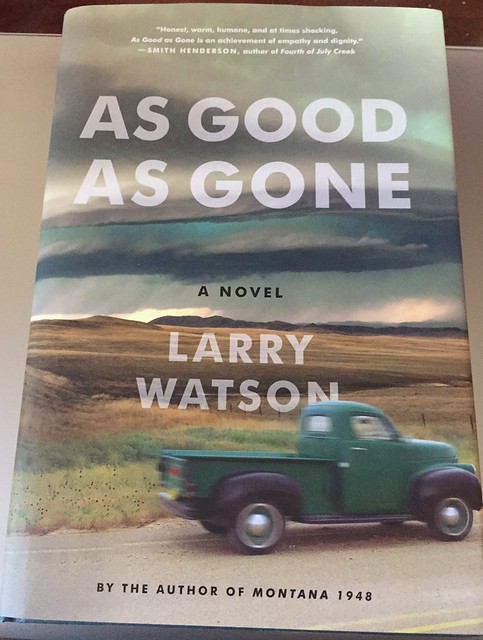
As Good As Gone, by Larry Watson

For book review
(my photo)

This is an Early Reviewers book, which I received from Algonquin Books, asking nothing but an honest review.

I enjoyed the storyline and the characters, got really involved in it, and kept reading to see what would happen. I did not much care for the strong language and sexuality, but the language was in keeping with the nature of the characters.

A tough, rangy old cowboy, now living almost as a hermit, is asked by his son to come stay with his grandchildren, who are strangers to him, for a few days while the son takes his wife to another city for surgery. The town, which as a former real estate agent, he helped build has also become strange to him, but the widow next door remembers him well.
His son and daughter-in-law have left some situations unresolved, and as attention is needed to sort them out, "Grandpa" delves in with knife and pistol and fists and tries to settle them the old-fashioned cowboy way.

Thursday, February 4, 2016

And After Many Days, by Jowhor Ile


This book was sent to me as part of LibraryThing's Early Reviewer program. In return, I was asked to write an honest review of my own opinion of the book.

This was a very absorbing book, a slow, descriptive narrative in parts, but at the same time, a thrilling plot that kept me reading, anxious to learn what happened to the 17 year old brother, the good-humored, peace-keeping elder brother who suddenly disappeared one summer afternoon.
The author, a native of Nigeria, took us back to the early childhood of the three children of the Utu family, familiarizing us with the thriving city of Port Harcourt, Nigeria's capital city, as well as the family's ancestral village of Ogibah.

"One rarely finds ‘page-turner’ and ‘poetry’ in the same sentence, but And After Many Days is a rarity indeed…An achingly tender portrait of family life, a brilliantly executed whodunnit, a searing critique of Nigerian politics, a meditation on love. The Utu family will stay with me always."
—Taiye Selasi, author of Ghana Must Go

Sunday, December 27, 2015

The Watsons Go To Birmingham, by Christopher Paul Curtis


An award winning children's/young adult story about a typical African American family of the upper midwest who travel to Alabama to visit relatives before a fateful September Sunday. Mr. Curtis very skillfully blends humor with tragedy.

Saturday, December 19, 2015

Evergreen, by Belva Plain

Having finished and enjoyed one Belva Plain book, I was eager to read another.

A great family saga, following Anna Friedman from her childhood in a 19th century Polish village through her immigration to America. Anna's life encompasses World Wars I and II, marriage, family, the depression, her husband's successful business, and many tragedies and joys.She lives to see grandchildren and a great granddaughter some fifty-odd years after her arrival.
Ever since her service as a maid in the Werner household, Anna has kept her attraction to the handsome young son of the family to herself, and after an incident several years later, she has even more devastating secrets to keep.

Monday, December 7, 2015

Whispers, by Belva Plain


Whispers and rumors abound, in the home and among friends and neighbors. Lies and cover-ups, to oneself, to children and other family members, to friends and neighbors. Finally, abruptly, and dramatically, it all must come out. A story of domestic violence, told very skillfully. This was not a pleasant book to read, but it kept me enthralled to the end.

Sunday, November 15, 2015

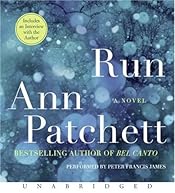
Run, by Ann Patchett (audiobook)


This book was given to me by a Bookcrossing friend, a surprise gift sent in the mail! (Thanks again, Captivated Reader!) It is an audiobook. I am not in the habit of listening to books; I usually prefer to hold and read them, but as it happened, husband and I made several long auto trips in the last month, and we both enjoyed listening to the book in the car.
We got caught up in the story: a retired mayor of Boston, Mass. has taken his two adult adopted sons to a lecture by Jesse Jackson. As they were leaving, his older son stepped off the curb into the path of a SUV. A stranger pushed him out of the way, and was herself seriously injured. She was taken by ambulance to a local hospital, leaving her 11 year old daughter alone on the street. The mayor and his sons persuade her come to their house. As it happens, the mayor's adopted sons are African-American, and so are the mother and daughter. As the story develops, long-hidden family secrets are slowly revealed and mysteries appear.
I never did quite understand older, natural born brother Sullivan's hidden past. Perhaps my thoughts wandered a little while that bit was explained, but I didn't want to listen to it all over again, just to find it. Otherwise, the story was quite enjoyable, but tied up a little too neatly and quickly at the end. Also, the bit about Tennessee's deceased friend mysteriously appearing in her hospital room seemed very strange, even surreal.
I did think that Peter Francis James did an excellent job narrating the story. His range of voices was spot on, from Boston Irish Catholic accents to Jamaican, Asian Indian, and perfect renditions of Jesse Jackson and of Dr. Martin Luther King, Jr. (as heard on a radio in the story). Every one was distinct and well done, even the young girl, without resorting to the use of falsetto.

Saturday, October 3, 2015

The Grapes of Wrath, by John Steinbeck


I read this many years ago, but I only remember bits and pieces of it. When I saw it at a yard sale last spring, I bought it to read again. I'm glad I did. There are many gems in it.
On corporate, commercial farming: "Carbon is not a man, nor salt nor water nor calcium. He is all of these, but he is much more, much more; and the land is so much more than its analysis. ...that man who is more than his elements knows the land that is more than its analysis. But the machine man, driving a dead tractor on land he does not know and love, understands only chemistry; and he is contemptuous of the land and of himself. When the corrugated iron doors are shut, he goes home and his home is not the land."

On the Dust Bowl migration along Route 66: "The people in flight streamed out on 66 .... All day they rolled slowly along the road, and at night they stopped near water. In the day ancient leaky radiators sent up columns of steam, loose connecting rods hammered and pounded. And the men driving the trucks and the overloaded cars listened apprehensively. How far between towns? It is a terror between towns. If something breaks - well, if something breaks we camp right here ...."

The people didn't leave because of the dust. They left because huge corporations bought the land from the owners. The people no longer owned the land their ancestors had settled. Years before, they had had to borrow against it and had been unable to pay their debts. Banks owned it. Land companies owned it. Sold it for profit, and drove the sharecropping tenants out. They had high hopes of a better life in California.

The above is a partial review; I hadn't finished it then. All I can say now is that it is a very deep, rich book. A disturbing, thought-provoking book. It was well worth reading again, I'm glad I did.

Okay, I have finished it, and actually gotten my old atlas of the United States and followed their journey through Oklahoma, the Texas panhandle, New Mexico, Arizona, and into California! The town they started from, Sallisaw, OK is in the far eastern part of Oklahoma, near Ft. Smith, Arkansas.

The book told the story of the Joad family, and interspersed this with chapter-long essays on the economy of the nation, the dust bowl migration as a whole and its effect on the western states to which they migrated, and the attitudes and actions of the people they met along the way: auto dealers, who sold the "jalopies" they needed, owners and employees of gas stations and diners whom they approached for fuel, water, and even sometimes food, fellow travelers with whom they camped on the sides of roads, campground managers, sheriffs and state police. This slowed the pace somewhat, but it helped in my understanding of the immensity of the entire situation.

Monday, August 24, 2015

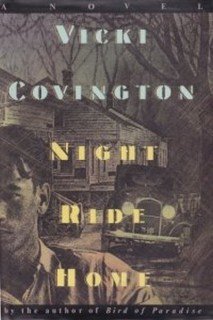
Night Ride Home, by Vicki Covington


I have mixed emotions about this book. It was fairly interesting to read, but none of the characters really "grabbed" me. What I liked best about it, I think, is that it was set near Birmingham, Alabama, where I lived for 34 years. I recognized many of the places, and the one trip into the city was particularly interesting for that reason.

Set in a coal mining community in Jefferson County, Alabama west of Birmingham, this is a story of the events before and during a mining disaster.

Keller is about to marry Laura, the daughter of the owners of a service station and general store, against her father's wishes. Her mother manages the store, and her father works occasionally at the nearby steel mill, but mostly just hangs around the store drinking, shooting clay pigeons, "skeets," and getting drunker and angrier by the hour. He threatens his future son-in-law with a shotgun, so they secretly delay the wedding by a day. As it turns out, the new wedding date is December 7, 1941. However, the Pearl Harbor attack and World War II are only mentioned in passing. The young man, Keller, is afraid he will have to go to war.

On Christmas Eve that year, a wall falls at the No. 3 mine, trapping Keller's father and his crew. Men work around the clock, trying to dig them out. Meanwhile, Keller's mother fulfills a singing engagement at the Catholic Church in Birmingham, and the pregnant camp prostitute goes into labor. (The identity of the baby's father is the topic of much gossip and speculation in the community.)

Vicki Covington and her husband Dennis Covington live and work in Birmingham, Alabama. Both are authors and have been newspaper columnists.

Friday, July 17, 2015

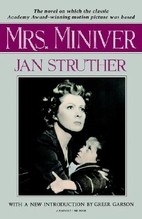
Mrs. Miniver, by Jan Struther


A book from the public library, read and reviewed on LibraryThing in January, 2014

Mrs. Miniver is an imaginative and thoughtful woman, a loving wife and mother. This is a gentle and easy reading book with little plot. Each chapter is a different episode of Mrs. Miniver's life, with her thoughts and observations.

Mrs. Miniver was strong in time of war and preparation for war (WW II). She tried to keep things as normal as possible for her children, preparing them without alarming them. She volunteered with First Aid and took in seven refugee children to her country house in Kent. Written with sympathy and humor, and plenty of human interest.

Monday, July 13, 2015

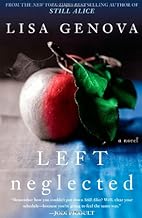
Left Neglected, by Lisa Genova


A book from the public library, read and reviewed in July, 2013

A fascinating fictional account of a woman who suffered from a very real but largely unknown medical condition, Left Neglect. A fast-lane, type A mother of three in a high-powered corporate position is suddenly rendered helpless following an auto accident. The book follows her therapy, her adjustments to her condition, her attempts to resume her former life, interpersonal relationships with her husband, children, and mother, and how she decides to live the rest of her life. I have read Still Alice by this author, and found it fascinating as well. I enjoy well written novels that deal with real issues in a convincing manner. I hope to find more of Lisa Genova's books.

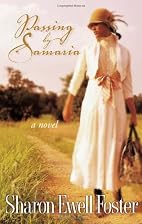
Passing by Samaria, by Sharon Ewell Foster


A public library book read in May, 2013

A novel with African American and Christian themes. A young woman in rural Mississippi in the year 1919 is forced to leave her family and community. She goes to stay with an aunt who runs a Christian mission in Chicago. Her faith has been tested and almost unraveled due to actions of racial bigotry and hate. Her life is turned around in Chicago.

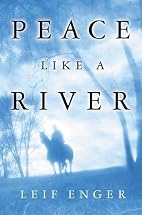
Peace Like a River, by Leif Enger


A public library book read in July, 2013

A most interesting book! A familiar story: a fugitive from justice relentlessly pursued by a single-minded lawman is helped by friends and family along the way. This one is told from the viewpoint of two children, the outlaw's asthmatic young brother and his precociously talented little sister, a remarkable poet of eight years old. Their father is a deeply spiritual man who believes in and experiences miracles. Davy is a teenager who values action. When he shot and killed two bullies, town ruffians who entered their home with intent to harm the family, was it defense of home and family or premeditated murder?

Sunday, July 12, 2015

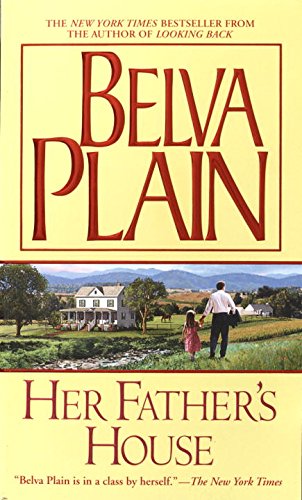
Her Father's House, by Belva Plain


Read, reviewed, and released in April, 2015

Interesting reading, an exciting tale about love gone wrong. An aspiring lawyer meets an attractive young woman, falls in love, and they marry. Then they learn that they are not suited for one another; she likes the fast life whereas he longs for a quieter, more conventional way of living. At her suggestion, they divorce, but not before she learns that she is pregnant.

The rest of the book tells of his decision to kidnap his daughter after a near disaster, and of his efforts to hide away in the country under an assumed name, with a new identity and a new life. However, he is eventually discovered, as we knew he must be.
I found it ironic that the things he most despised in his former wife, her lies and deception, became the way he lived for many years, hiding in the country.

I had some problems with this book. What did she see in him, why did she pursue him? Why was she so eager to marry him? His philosophy of life was no secret to her. Also, it seems to me that he could have proven that the child was endangered, having been taken to an adult party with excessive drinking and drug use, and put into a car with a drunken, speeding driver. Oh, well, it did make for an exciting tale.

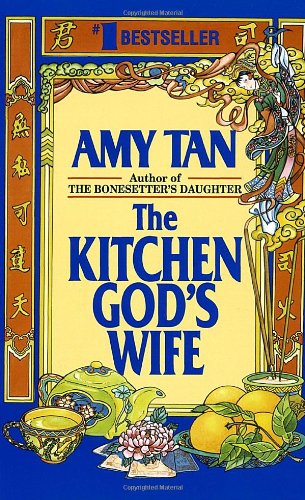
The Kitchen God's Wife, by Amy Tan


Read and reviewed in May, 2015

A very powerful book, and distrubing. It begins very simply and seemingly ordinary, with a family reunion and wedding. However, as the mother reveals more and more of her past to her daughter, it became very hard to read, especially about Weili's first marriage, the abuse and the heartaches she endured. The story line begins in California, and takes us back to war-torn China, facing first the Japanese and then the Communists. War and politics are only a background for Weili's troubles, though.

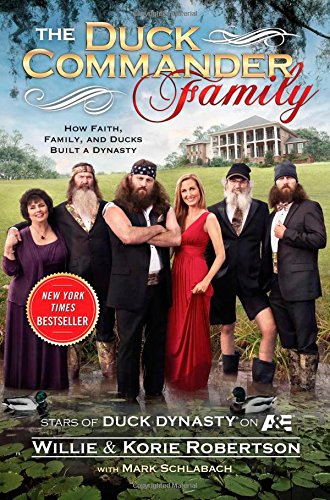
The Duck Commander Family: How Faith, Family, and Ducks Built a Dynasty, by Willie Robertson, Korie Robertson


Read, reviewed, and released in March-April, 2015

I found this entertaining reading, as I am a fan of Duck Dynasty. This gives some behind-the-scenes background information about the family, particularly Willie and Korie, but includes Willie's parents Phil and Miss Kay, and Korie's parents, John and Chrys Howard. Each chapter begins with a verse of Scripture that illustrates this particular area of their lives, is named for a food dish that symbolizes different life stages for them, and ends with a recipe. The writing style is casual and confidential. I can almost hear Willie's voice as he sounds on the show.

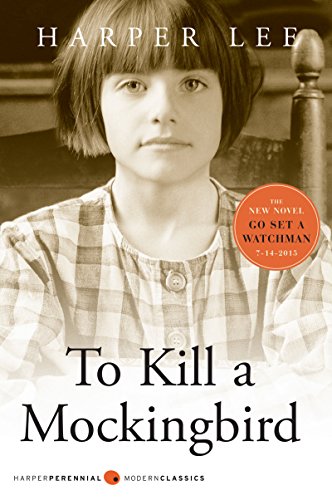
To Kill a Mockingbird, by Harper Lee


Read and reviewed in February, 2015, keeping for my personal collection

I rarely buy a new book, but I bought this one at Books-a-Million yesterday, Monday Feb. 16. I also pre-ordered Go Set a Watchman, the recently discovered manuscript by the same author, Harper Lee.
I thought I had read it years ago, but I didn't remember anything as I read it this time. I have seen the movie, so I recognized the characters and some of the plot from that. I don't know how I missed reading it, but apparently I did. So, I am all the more grateful that I decided to buy this one now.
A wonderful book of childhood in small town 1930s America.
Brother and sister Jem and Scout Finch live what seems an idyllic life with their widowed attorney father and their maid/housekeeper/surrogate mother until the summer that their father takes on a very controversial trial, defending an innocent African American man against all odds.
Other characters featured in this story are the children's friend Dill who comes every summer to visit his aunt, the Finches next door neighbor, and Boo Radley,
their reclusive, possibly mentally challenged neighbor down the block.
This is a classic in American literature, required reading for most high schools and many lower grades as well. (I graduated not many years after it was first published, so it hadn't yet made the required reading list in my time.) Its reputation is well deserved; it is wonderfully written, and the characters are drawn with precision. A delightful book, it kept me interested from beginning to end. I am looking forward to Go Set a Watchman, which is to feature Scout as a young woman.